September 9, 2025.
The second day of the Gen Z movement will forever be remembered in Nepal’s history as an hour of destruction.
Every movement that topples a political regime leaves behind a defining image that becomes part of the collective memory.
When we think of the 1990 People’s Movement, we still remember the photograph of a young man climbing the statue of King Mahendra at Durbar Marg and removing the royal scepter.
The defining image of the 2006-07 People’s Movement was the sea of people surging along the winding roads of the Ring Road.
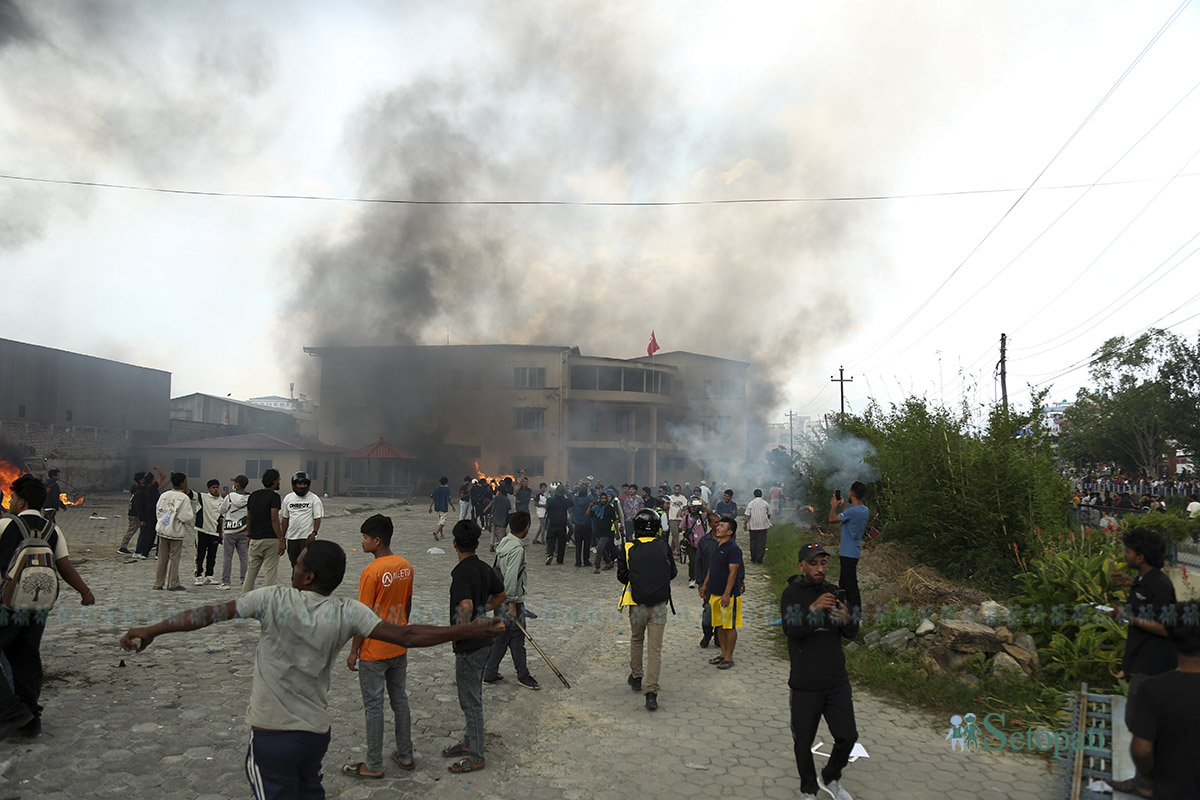
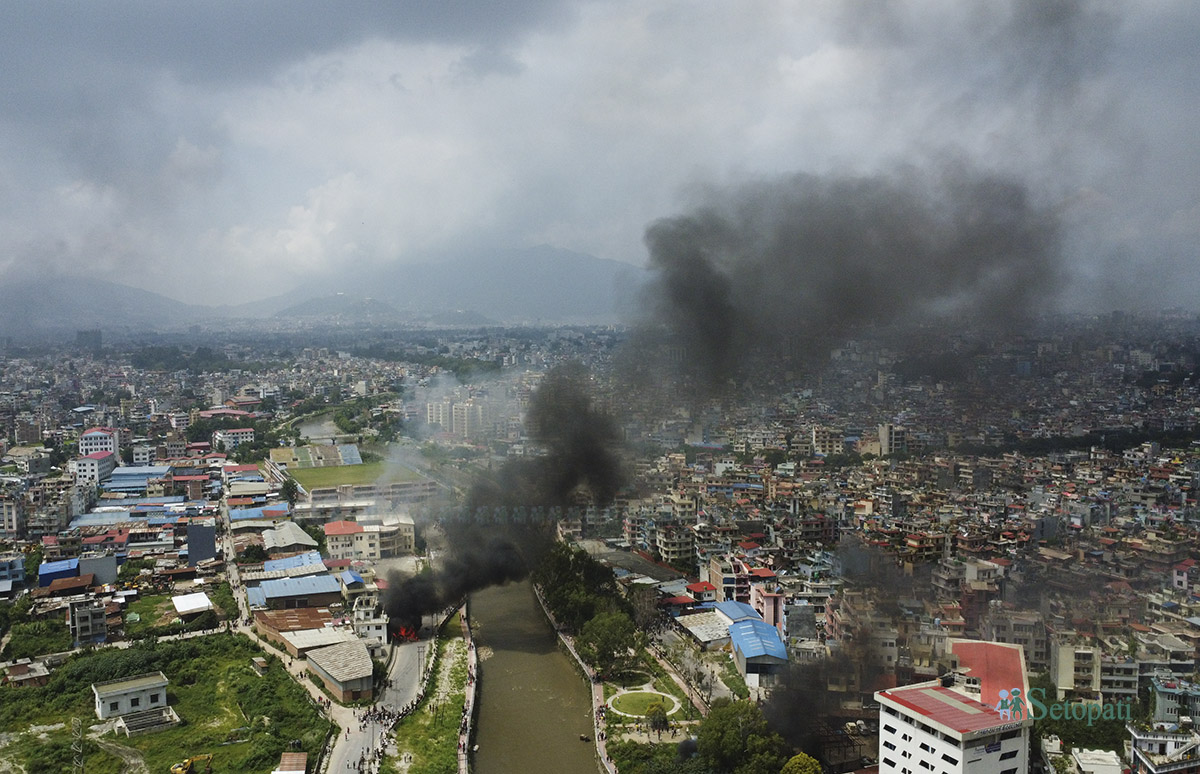
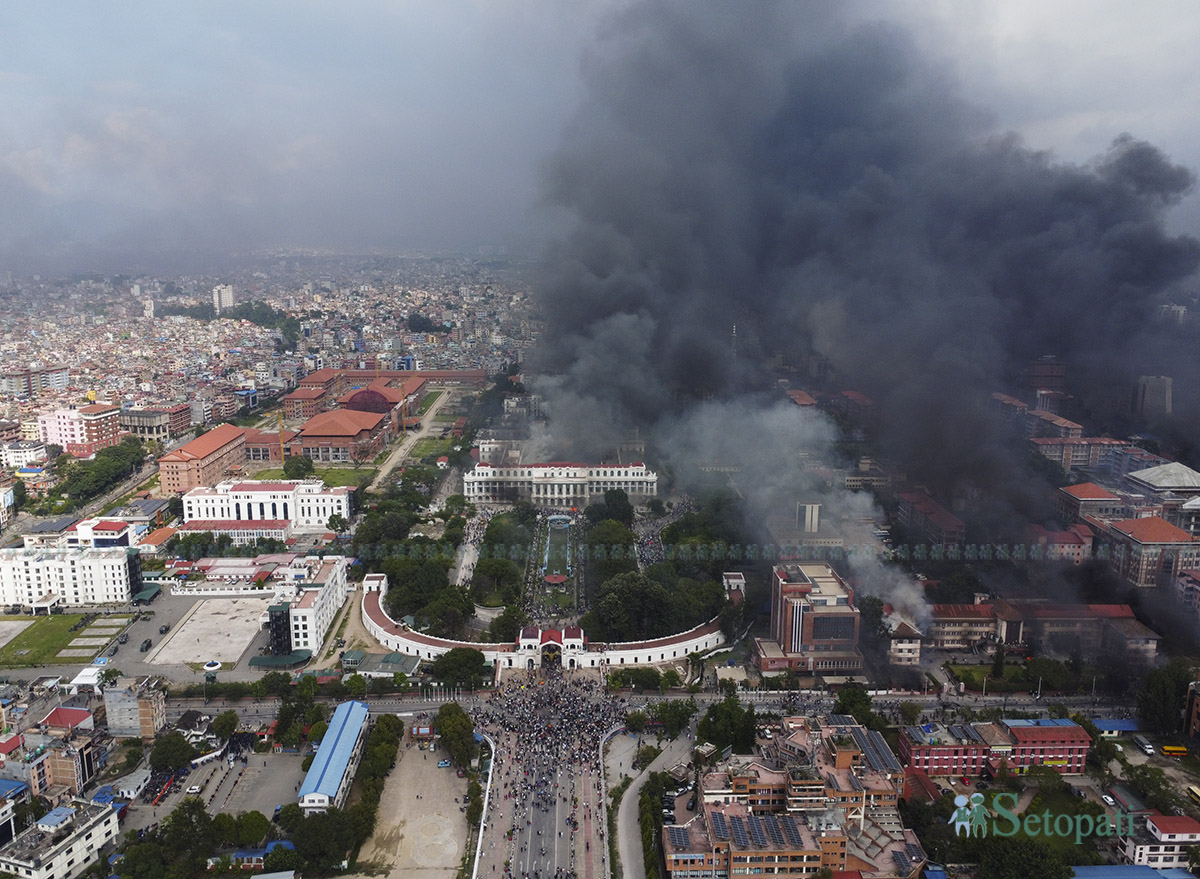
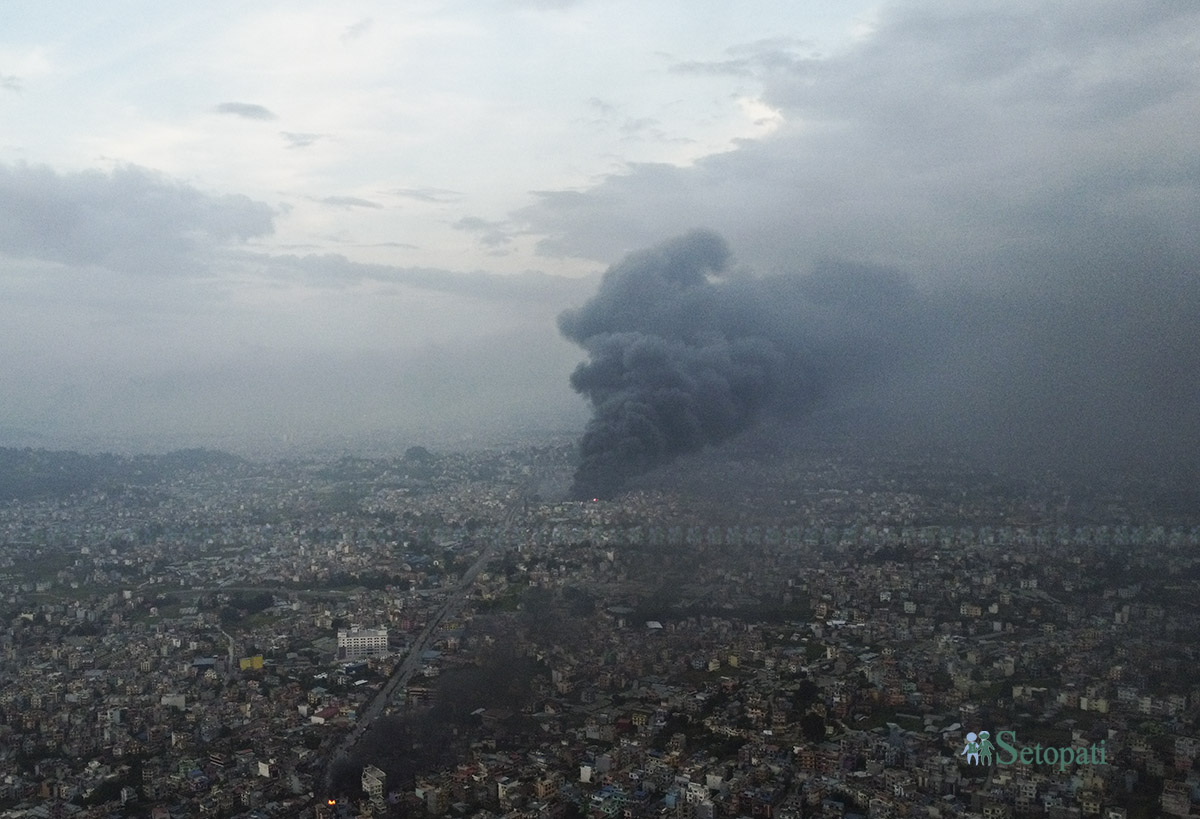
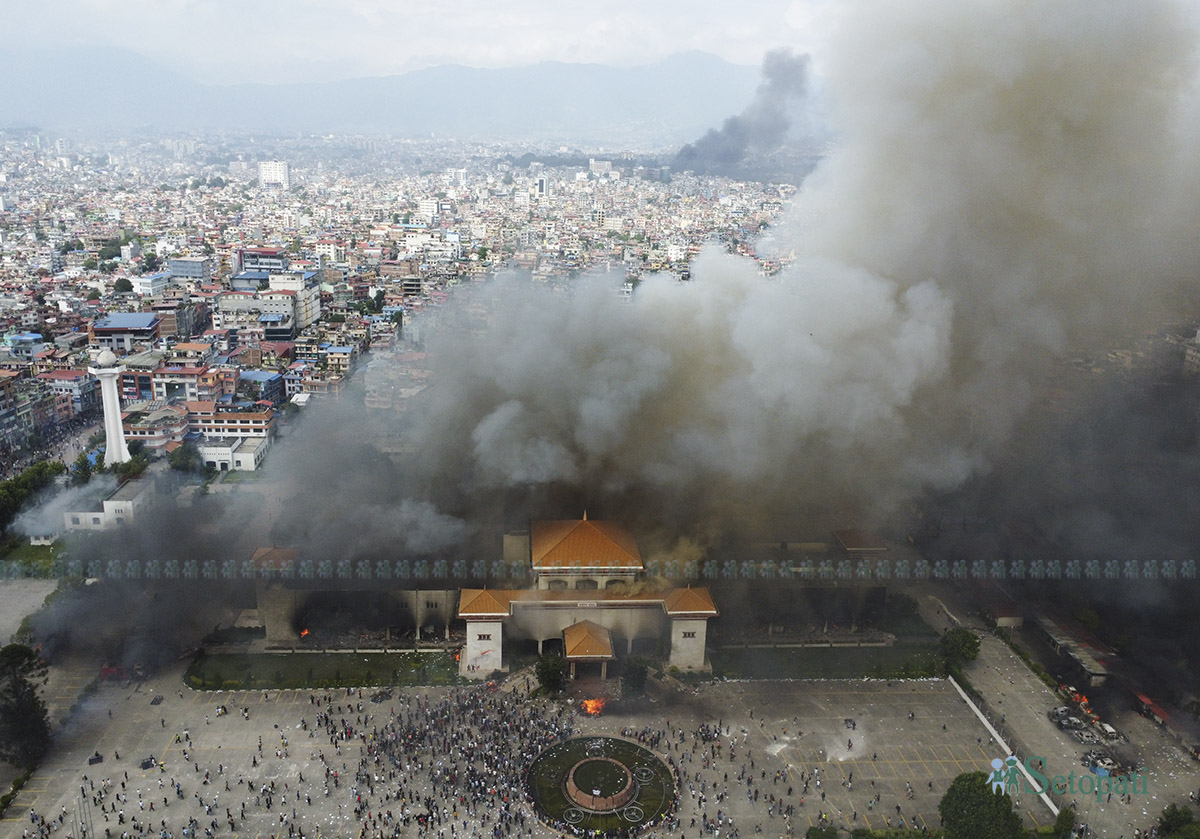
The defining memory left by last year’s Gen Z movement, on September 8 and 9, is instead the government buildings – including Singha Durbar and the Parliament building – engulfed in red flames and billowing black smoke.
That day, Kathmandu witnessed an extraordinary moment when the very structures considered the most powerful and secure symbols of the state became vulnerable.
After 19 young people were killed by police gunfire on September 8, the first day of the movement, angry protestors took to the streets early the following morning.
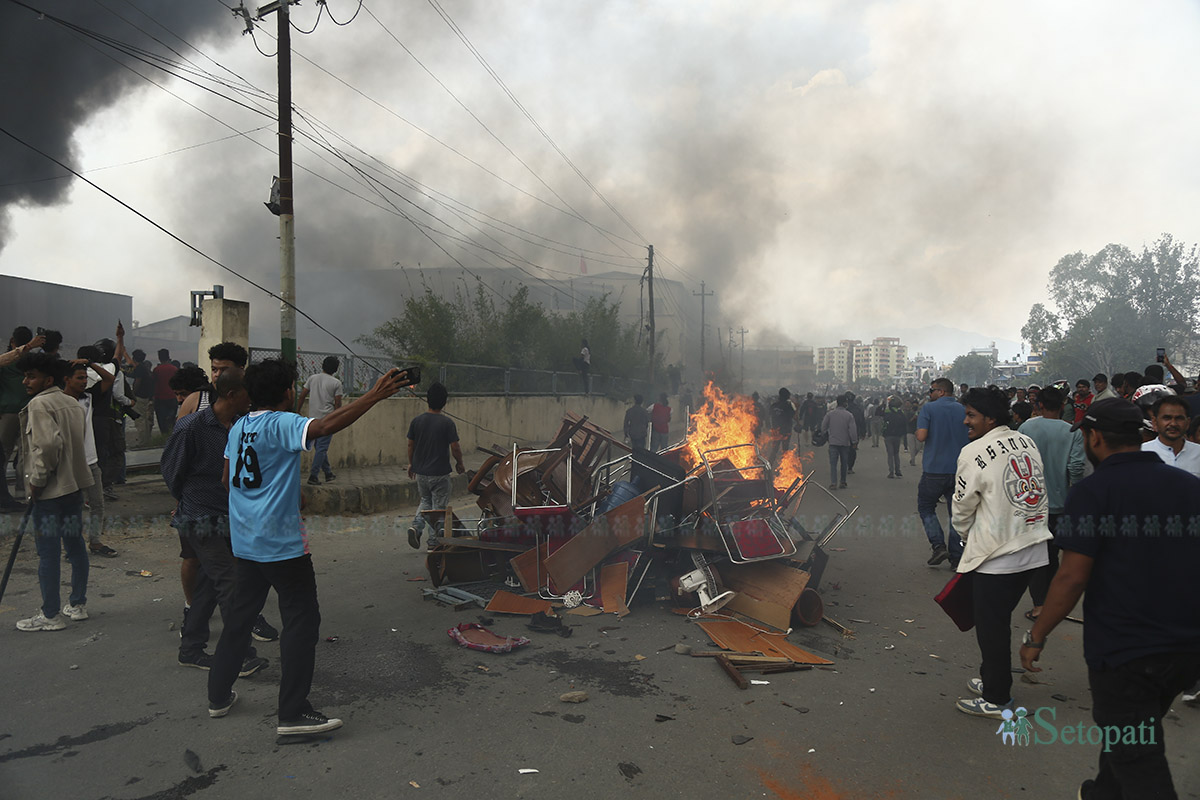
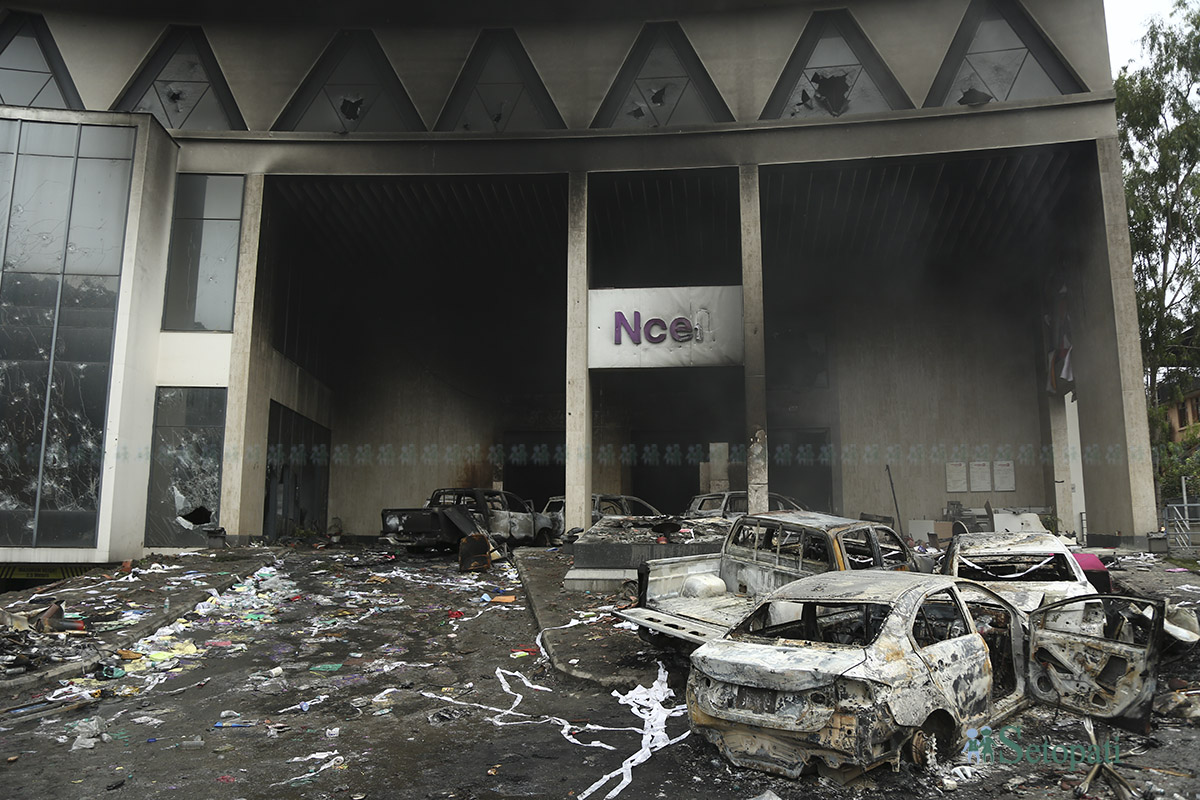
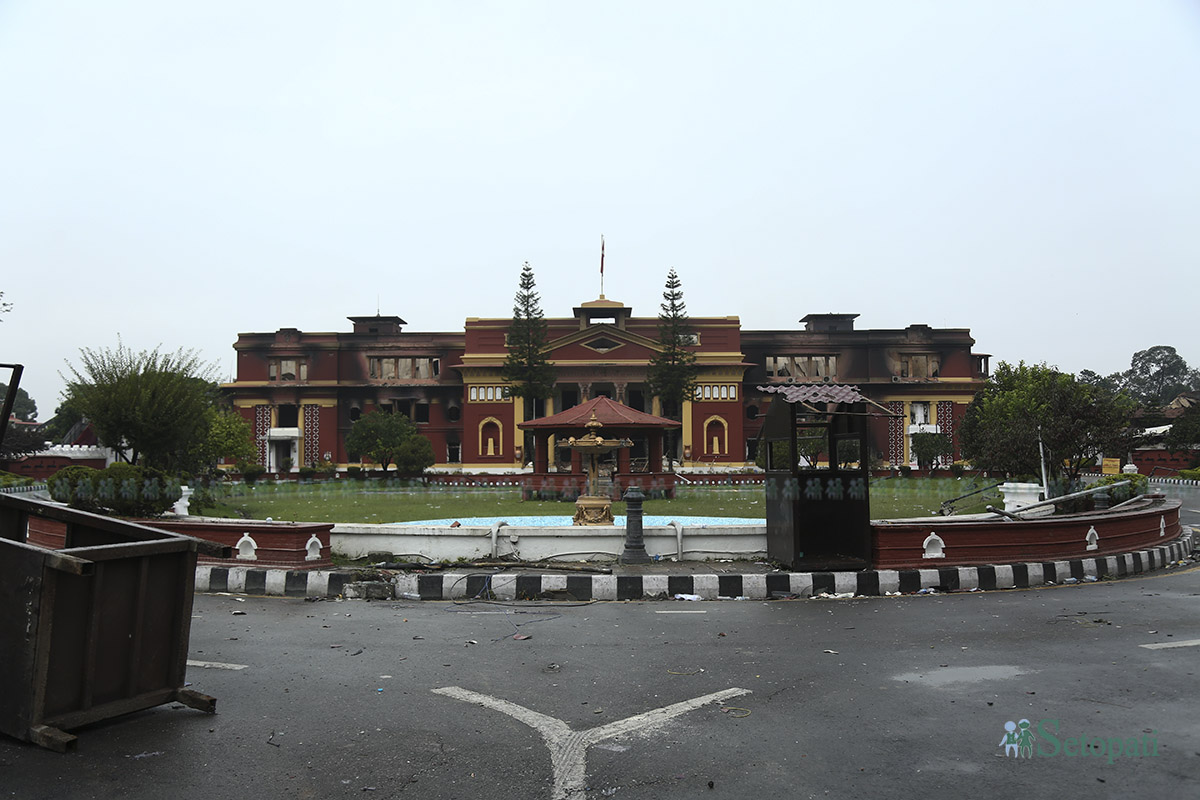
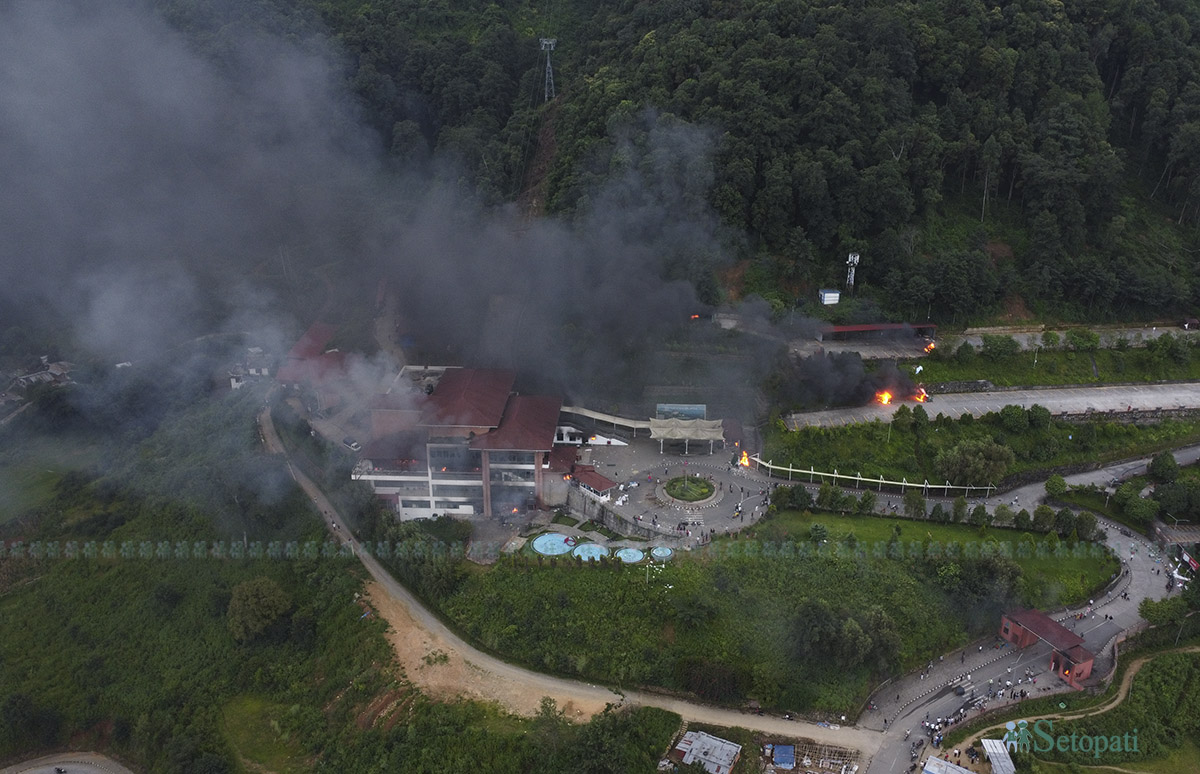
Within a few hours, the crowds had reached government buildings. Important state institutions – including the Parliament building, Singha Durbar, the Supreme Court, and Sheetal Niwas – were set ablaze and vandalized.
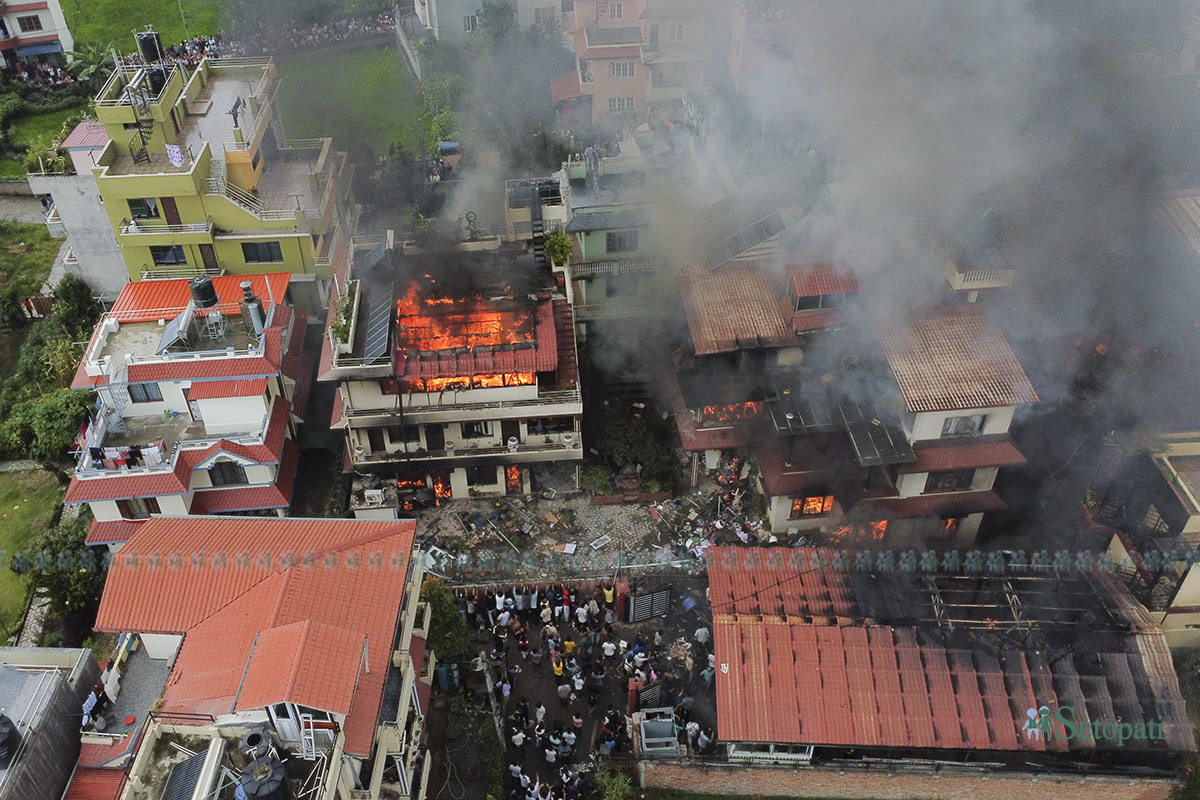
The irony was that structures normally protected by the state’s most stringent security had themselves become targets of arson. Flames were pouring from the windows of government buildings guarded by the army.
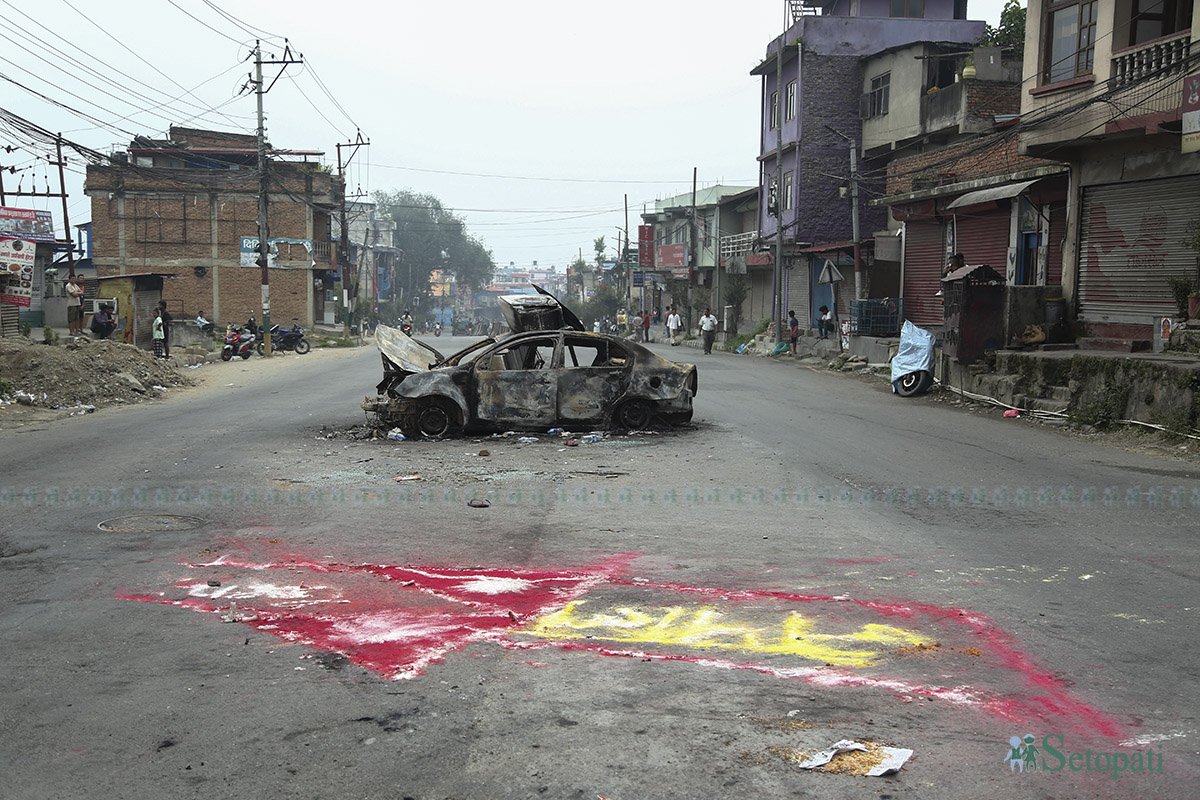
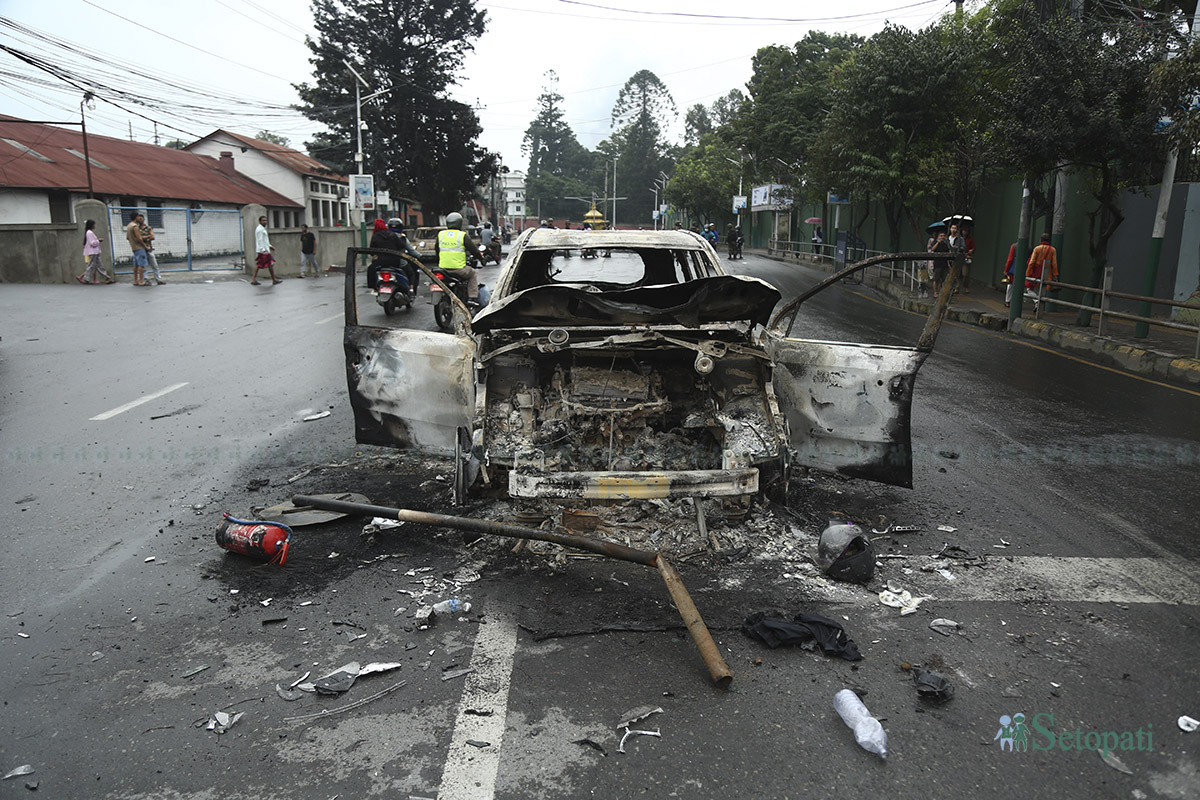
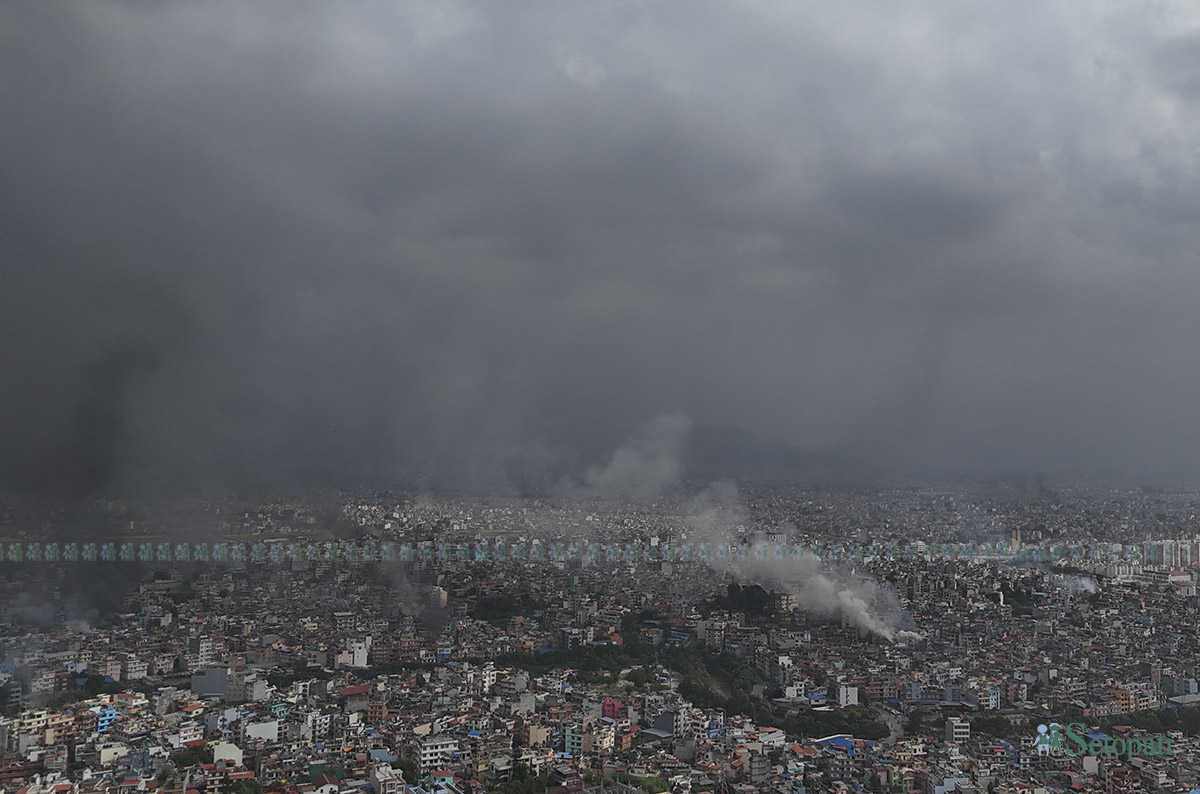
Buildings that had stood for decades as symbols of state power were transformed within a few hours into scenes of fire, smoke, and ruins.
These photographs from September 9 are a record of that extraordinary day – a day when structures considered the strongest pillars of the state were on fire, security cordons had collapsed, and Kathmandu witnessed a terrifying sight of the state’s weakened presence.